What Are the Best Textured Tiles for Feature Walls?
A feature wall can completely change the character of a room. Instead of leaving every wall plain, textured tiles add depth, dimension, and visual interest while creating a defined focal point.
From contemporary living rooms to luxury bathrooms, textured wall tiles are available in stone-inspired, fluted, 3D, concrete, marble, and geometric finishes. The right choice depends on the room, lighting, furniture, and overall design style.
What Are Textured Wall Tiles?
Textured wall tiles have a raised, carved, embossed, or naturally irregular surface that creates a three-dimensional appearance. Unlike flat tiles, they interact with light and shadow, giving walls more depth.
Popular options include:
- 3D tiles
- Fluted and ribbed tiles
- Stone-effect tiles
- Concrete-effect tiles
- Geometric textured tiles
- Marble-inspired textured tiles
- Linear decorative tiles
They can be used selectively to create feature walls rather than covering every surface.
Why Use Textured Tiles for a Feature Wall?
Textured tiles can serve both decorative and functional purposes.
1. They Create a Strong Focal Point
A textured wall naturally attracts attention. In a living room, it can frame a TV or seating area. In a bathroom, it can highlight the vanity or shower wall.
2. They Add Depth to Minimal Interiors
Minimalist rooms can sometimes look flat when every surface has the same finish. Texture introduces contrast without requiring bold colors.
3. They Work With Different Interior Styles
Depending on the pattern and material, textured tiles can complement:
- Modern interiors
- Contemporary homes
- Luxury interiors
- Industrial designs
- Minimalist spaces
- Natural and earthy interiors
4. They Enhance Lighting
Texture creates highlights and shadows across the wall. With directional or ambient lighting, even a neutral tile can become a striking design element.
Best Textured Tiles for Feature Walls
1. 3D Tiles
3D tiles are ideal when you want a feature wall with noticeable depth and geometric character.
They work particularly well on:
- TV walls
- Bedroom feature walls
- Reception areas
- Living room walls
- Commercial interiors
For a modern look, choose subtle geometric patterns rather than overly complex designs.
2. Fluted and Ribbed Tiles
Fluted textures have vertical grooves that create a refined architectural appearance. They are especially effective in contemporary interiors because their repetitive lines add rhythm without making the wall visually chaotic.
They can be used behind:
- TV consoles
- Bathroom vanities
- Dining areas
- Entryway consoles
- Bed backdrops
3. Stone-Effect Textured Tiles
Stone-inspired tiles bring an organic appearance into interiors. They are a strong choice for homeowners who want a natural, sophisticated atmosphere without relying on natural stone.
Stone textures work beautifully for both living room walls and luxury bathroom interiors.
4. Concrete-Effect Textured Tiles
Concrete-inspired surfaces are popular in modern and industrial interiors. Their muted colors and subtle texture provide an understated backdrop for furniture, metal accents, and contemporary lighting.
They are particularly suitable for modern feature walls where you want texture without excessive decoration.
5. Geometric Decorative Tiles
Geometric decorative tiles can turn a simple wall into an artistic focal point. Hexagons, linear patterns, waves, and abstract shapes can create different visual effects.
Because geometric patterns are naturally attention-grabbing, they are best used on one carefully selected wall.
Textured Tiles for Living Room Walls
The living room is one of the best places to experiment with texture.
A feature wall behind the TV, sofa, or console can become the room’s main design element.
Recommended combinations:
| Interior Style | Recommended Texture | Color Direction |
| Modern | 3D or geometric | Grey, beige, charcoal |
| Luxury | Marble or stone texture | Cream, ivory, warm grey |
| Minimal | Linear/fluted | Soft beige, white, taupe |
| Industrial | Concrete texture | Grey, charcoal |
| Natural | Stone-effect | Sand, beige, earthy tones |
For large living rooms, large-format textured surfaces can create a sophisticated architectural statement without making the space feel overly decorative.
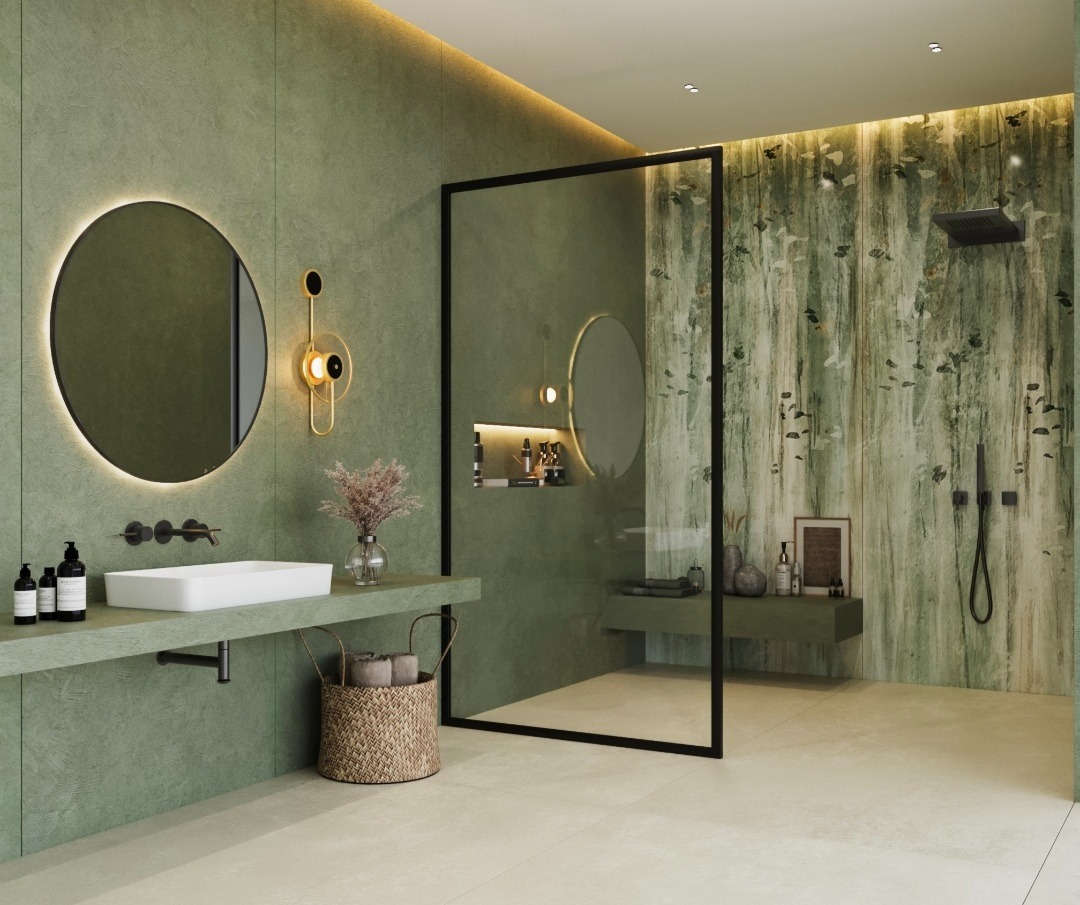
Textured Tiles for Bathroom Walls
Bathrooms are another excellent application for textured wall tiles.
Instead of using the same tile throughout the bathroom, use a textured design selectively to create contrast.
Good locations include:
- Vanity backdrop
- Shower feature wall
- Bathtub wall
- Behind a mirror
- Niche wall
For wet areas, always check that the selected tile and installation system are appropriate for the specific application.
A combination of a textured feature wall, large-format neutral tiles, premium sanitary ware, and carefully positioned lighting can create a high-end bathroom aesthetic.
How to Choose the Right Texture for Your Home
Before selecting a textured tile, consider these five factors.
1. Room Size
Large patterns can dominate small rooms. In compact spaces, subtle linear textures or lighter colors can create depth without overwhelming the room.
2. Lighting
Texture looks different under different lighting conditions. Natural light, wall washers, spotlights, and warm ambient lighting can dramatically change the appearance of a textured surface.
3. Furniture
Your tile should complement—not compete with—the furniture.
If your furniture already has strong patterns, consider a subtle textured wall.
4. Color Palette
Neutral textured tiles are easier to coordinate with changing furniture and décor. Bold textures can work beautifully when the rest of the room is restrained.
5. Maintenance
Deep grooves and intricate patterns can require more attention than smooth surfaces. Consider how easily the selected tile can be cleaned before using it in areas exposed to dust, moisture, or frequent contact.
Textured Tiles vs Flat Tiles
| Feature | Textured Tiles | Flat Tiles |
| Visual depth | High | Low to moderate |
| Light interaction | Strong | Subtle |
| Feature wall suitability | Excellent | Good |
| Design impact | High | Moderate |
| Best application | Accent walls | Full-wall applications |
| Style flexibility | Modern to decorative | Extremely versatile |
Textured tiles are generally most effective when used strategically rather than covering every wall in a room.
How to Make a Textured Feature Wall Look More Luxurious
You don’t need an elaborate pattern to create a premium appearance. The details surrounding the tile matter just as much.
Consider combining textured tiles with:
- Warm architectural lighting
- Minimal furniture
- Large mirrors
- Natural wood elements
- Metal accents
- Neutral flooring
- Premium sanitary fixtures
- Carefully selected décor
The goal is to create contrast and depth while maintaining visual balance.
Common Mistakes When Using Textured Wall Tiles
Using Texture on Every Wall
Too much texture can make a room feel visually busy. Select one primary feature area.
Ignoring Lighting
A beautiful texture may look completely different without appropriate lighting. Always evaluate samples under the lighting conditions of the actual space.
Mixing Too Many Patterns
If the wall has a strong geometric pattern, keep the surrounding finishes relatively simple.
Choosing Texture Only for Appearance
Consider cleaning, moisture exposure, installation requirements, and long-term maintenance before making a final decision.
Where to Find Textured Wall Tiles in Pakistan?
For homeowners, architects, and interior designers looking for premium surfaces, HVERSE offers a range of tiles and interior solutions for residential and commercial projects.
Whether you’re designing living room walls, bathroom feature walls, kitchens, bedrooms, or commercial spaces, the right combination of tile texture, size, color, and lighting can create a distinctive interior.
The best textured wall tiles aren’t necessarily the most dramatic ones. They are the ones that complement the architecture, lighting, furniture, and overall design language of the space.
Final Creative Take
Don’t let your walls blend in.
Give them depth.
Give them character.
Give them a reason to be noticed.
From subtle stone textures to bold 3D patterns, the right feature wall can turn an ordinary interior into a statement.
Choose the texture. Set the mood. Transform the space.
Frequently Asked Questions
1. What are the best textured wall tiles for living rooms?
3D, stone-effect, fluted, concrete-effect, and geometric tiles are popular choices for living room feature walls. The best option depends on the room’s furniture, lighting, and overall style.
2. Are textured tiles suitable for bathroom walls?
Yes. Textured tiles can work well on bathroom walls, particularly behind vanities, mirrors, bathtubs, and showers. Always confirm that the selected tile is suitable for its intended wet-area application.
3. Are 3D tiles still popular for feature walls?
Yes. 3D tiles remain a strong option for contemporary feature walls, particularly when used selectively with suitable lighting and minimalist surrounding finishes.
4. Are textured tiles difficult to maintain?
Maintenance depends on the tile’s texture and application. Deep or intricate textures may require more cleaning than smooth surfaces, so maintenance should be considered before selection.
5. Can textured tiles make a small room look bigger?
They can add depth and visual interest, but heavily patterned textures may overwhelm a small room. Light-colored, subtle, or linear textures are generally easier to incorporate into compact spaces.