How to Choose Slip-Resistant Tiles for Bathroom Floors?
Bathroom flooring needs to look good, but bathroom safety should always come first. Water, steam, soap, and moisture can make smooth surfaces slippery, increasing the risk of falls. Choosing the right bathroom tiles can help create a safer, more practical, and visually appealing bathroom. Among the most important factors are tile texture, finish, slip-resistant tiles, maintenance, and the specific area where the tiles will be installed. This guide explains how to select anti slip bathroom tiles for wet areas without compromising on modern bathroom design.
Why Slip Resistance Matters in Bathroom Floors
Bathrooms are naturally wet environments. Water can accumulate around showers, bathtubs, washbasins, and other wet areas, making flooring more challenging to walk on safely.
The right bathroom floor tiles should provide:
- Good traction when wet
- A suitable surface texture
- Easy maintenance
- Appropriate durability
- A finish suitable for the bathroom environment
A beautiful tile is not necessarily the right tile for a wet floor. Flooring should always be selected according to both design and function.
What Are Anti Slip Bathroom Tiles?
Anti slip bathroom tiles are floor tiles designed to provide better grip and traction, particularly where moisture is present.
They commonly feature:
- Textured or slightly structured surfaces
- Matte finishes
- Appropriate slip-resistance ratings
- Porcelain or other durable materials
- Finishes designed for wet environments
However, “anti-slip” should not simply mean choosing the roughest tile available. Extremely rough surfaces can be difficult to clean and may be uncomfortable underfoot. The ideal choice balances traction, comfort, hygiene, and aesthetics.
Are Matte Tiles Better for Bathroom Floors?
In many bathroom applications, matte tiles can be a practical choice because their surface generally provides more visual and tactile texture than highly polished tiles.
Matte finishes are particularly suitable for:
- Shower floors
- Bathroom floors
- Wet areas
- High-use bathrooms
- Modern minimalist interiors
Glossy tiles can still be excellent for bathroom walls, where slip resistance is less relevant, but they should be evaluated carefully before being used as flooring.
How to Check Tile Slip Resistance
When selecting bathroom tiles, ask your tile supplier for the manufacturer’s slip-resistance information rather than relying only on appearance.
Depending on the market and testing standard, slip performance may be expressed through different classifications or test methods. For wet floors, the appropriate rating depends on the location and intended use.
Before purchasing, ask:
- What slip-resistance rating does the tile have?
- Is it recommended for wet floors?
- Is it suitable for shower areas?
- What cleaning method does the manufacturer recommend?
- Is the finish designed for residential bathroom use?
This information makes home tile selection more reliable than judging a tile by texture alone.
Choose Different Tiles for Different Bathroom Areas
Not every surface in a bathroom needs the same type of tile.
| Bathroom Area | Recommended Tile Considerations |
| Shower Floor | Slip-resistant, textured or matte surface |
| Main Bathroom Floor | Durable, practical, easy-clean finish |
| Bathroom Walls | Glossy, matte, textured or decorative finishes |
| Shower Walls | Water-resistant, easy-maintenance surfaces |
| Vanity Feature Wall | Decorative tiles based on design preference |
The floor should receive the greatest attention to slip resistance because it experiences direct contact with water and foot traffic.
Porcelain vs Ceramic for Bathroom Floors
Both porcelain and ceramic tiles can be used in bathrooms, but the specific product and its intended application matter more than the material name alone.
Porcelain Tiles
Porcelain is popular for bathroom flooring because it is durable and available in many finishes, colors, textures, and stone-inspired designs.
Ceramic Tiles
Ceramic tiles offer a broad range of decorative options and are commonly used for bathroom walls and selected flooring applications.
When choosing between them, look at the manufacturer’s specifications, water absorption, intended application, surface finish, and slip performance.
What Tile Finish Is Best for Wet Areas?
The ideal tile finishes for wet areas depend on the specific application.
Matte Finish
A popular option for bathroom floors because it offers a less reflective surface and can provide useful traction.
Textured Finish
Textured surfaces can enhance grip and create visual interest, but excessive texture may make cleaning more difficult.
Polished Finish
Polished tiles offer a luxurious appearance and work particularly well on walls. For wet flooring, however, their suitability should be confirmed through the manufacturer’s slip-resistance specifications.
How Tile Size Affects Bathroom Safety
Tile size also matters when designing a bathroom floor.
Large-format tiles create fewer grout joints and a clean contemporary appearance. However, smaller tiles can provide more grout lines, which may offer additional points of contact underfoot.
For shower floors with slopes toward a drain, smaller formats can sometimes make it easier to follow the required floor gradient.
The best choice depends on the bathroom layout, drainage design, tile specifications, and installation method.
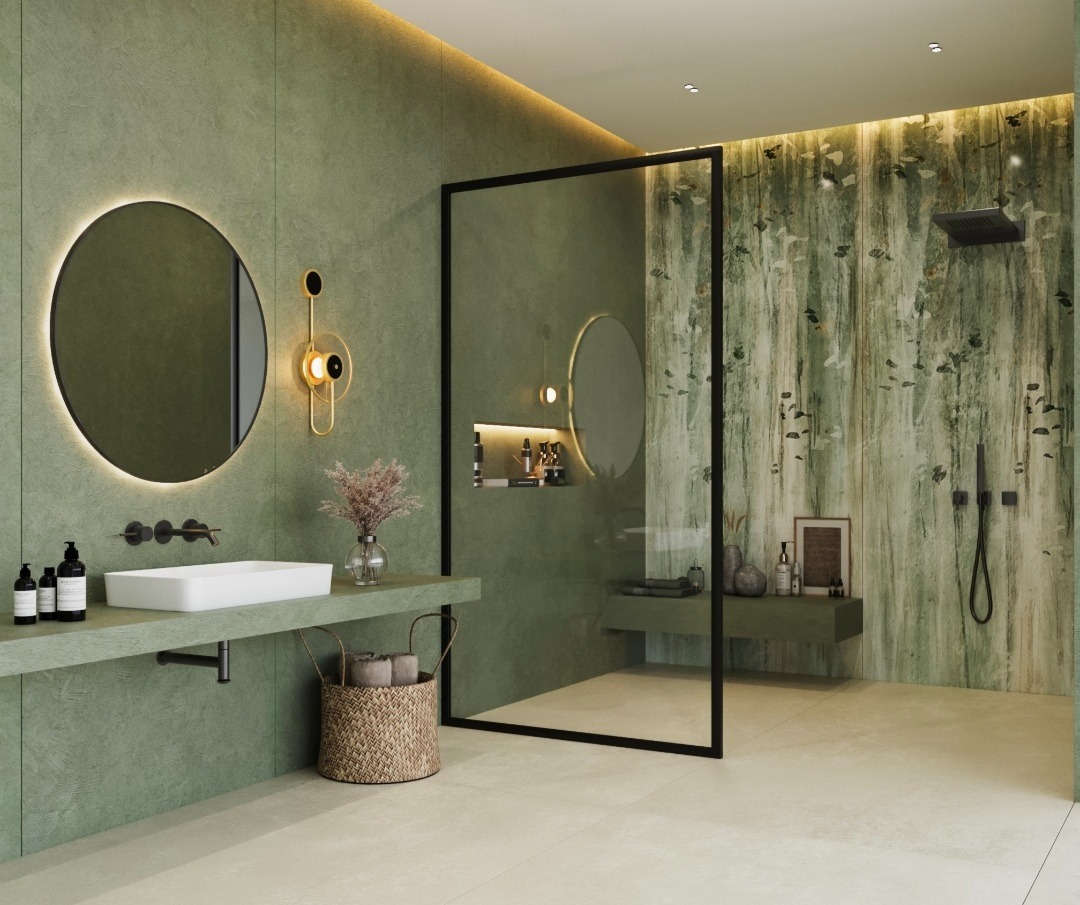
How to Combine Safety With Luxury Bathroom Design
Choosing slip-resistant bathroom tiles does not mean compromising on style.
You can create a premium bathroom by combining:
- Matte stone-look floor tiles
- Large-format wall tiles
- Textured feature walls
- Neutral colors
- Contemporary sanitary ware
- Minimal grout lines
- Well-planned lighting
For example, a marble-look wall tile can be paired with a matte stone-effect floor tile. The contrast between finishes adds depth while keeping the floor more practical for a wet environment.
Common Mistakes When Choosing Bathroom Floor Tiles
Choosing Tiles Only for Their Appearance
A beautiful tile may not be suitable for wet flooring. Always check its application and performance specifications.
Using Highly Polished Tiles on Wet Floors
Polished surfaces can become challenging when wet. Confirm the product’s slip-resistance rating before installation.
Ignoring Grout and Drainage
Even good bathroom tiles require proper installation. Correct slopes, drainage, grout selection, and installation quality all contribute to bathroom safety.
Selecting Extremely Rough Tiles
More texture does not automatically mean better. Very rough surfaces can trap dirt and make regular cleaning harder.
Using the Same Finish Everywhere
Walls and floors have different requirements. Mixing finishes can create a better balance between aesthetics and functionality.
A Simple Checklist for Buying Bathroom Tiles
Before purchasing your bathroom floor tiles, check:
✔ Intended application — Is the product suitable for flooring?
✔ Slip resistance — Does the manufacturer provide relevant test information?
✔ Finish — Is matte or textured more appropriate for the area?
✔ Water performance — Is the tile suitable for wet environments?
✔ Maintenance — Can the surface be cleaned easily?
✔ Size — Does the format work with your bathroom’s drainage and layout?
✔ Design — Does it complement your walls, vanity, and sanitary ware?
This checklist can help you make a more informed decision when selecting bathroom tiles.
Choose Bathroom Tiles With HVERSE
At HVERSE, bathroom design goes beyond choosing a visually appealing surface. The right combination of floor tiles, wall tiles, sanitary ware, and finishes can create a bathroom that looks premium while remaining practical for everyday use.
Whether you are designing a new bathroom or renovating an existing one, consider the environment, usage, maintenance requirements, and slip resistance before making your final tile selection.
The best bathroom floor is not simply the one that looks luxurious — it is the one that combines design, durability, comfort, and safety.
Frequently Asked Questions
1. What are the best bathroom tiles for slip resistance?
Matte or appropriately textured bathroom floor tiles with verified slip-resistance performance are generally suitable options for wet areas. Always check the manufacturer’s specifications.
2. Are matte tiles safer than glossy tiles for bathroom floors?
Matte tiles are often preferred for bathroom flooring because they can provide more traction than highly polished surfaces. However, the actual slip-resistance rating should be checked before purchase.
3. What are the best tiles for a shower floor?
Choose tiles specifically recommended for wet flooring and verify their slip-resistance characteristics. Smaller formats can also be useful where a shower floor needs to slope toward a drain.
4. Can porcelain tiles be used in bathrooms?
Yes. Porcelain tiles are widely used in bathroom floors and walls. Select a product according to its intended application, water performance, finish, and slip-resistance specifications.
5. How can I make my bathroom floor safer?
Choose suitable slip-resistant bathroom tiles, ensure proper drainage and floor slope, use appropriate grout and installation methods, and keep the surface clean and free from soap buildup.