Are Porcelain Slabs Better Than Tiles for Feature Walls?
Feature walls have become an important part of modern interior design. Whether it is a living room media wall, luxury bathroom, kitchen backsplash, bedroom accent wall, or commercial reception area, the right wall surface can dramatically change the appearance of a space.
One of the biggest choices homeowners and designers face today is porcelain slabs for walls vs traditional tiles. Large-format porcelain slabs offer fewer grout lines, impressive visual continuity, and a premium architectural appearance, making them particularly attractive for luxury interiors.
But are porcelain slabs actually better than tiles for feature walls? The answer depends on the design, installation requirements, room size, and the look you want to achieve.
What Are Porcelain Slabs?
Porcelain slabs are large-format porcelain tiles manufactured in significantly bigger dimensions than conventional tiles. Their size allows designers to cover large wall areas with fewer individual pieces and considerably fewer grout joints.
Modern porcelain slabs are available in a wide range of designs, including:
- Marble-inspired surfaces
- Natural stone effects
- Travertine looks
- Concrete finishes
- Onyx-inspired patterns
- Minimalist solid colors
- Dramatic veining
- Contemporary textures
Because of their scale and visual continuity, large slabs are increasingly used in high-end residential and commercial interiors.
Porcelain Slabs vs Traditional Tiles for Feature Walls
Both options can create beautiful feature walls, but they offer different design possibilities.
| Feature | Porcelain Slabs | Traditional Tiles |
| Visual continuity | Excellent | Depends on tile size |
| Grout lines | Minimal | More visible |
| Luxury appearance | Very high | High |
| Large wall coverage | Excellent | Requires multiple tiles |
| Design impact | Strong architectural look | More pattern flexibility |
| Installation | Requires experienced installers | Generally easier |
| Maintenance | Fewer grout joints | More grout to maintain |
| Best for | Statement walls & luxury interiors | Flexible designs & patterns |
For homeowners looking for a dramatic, continuous surface, porcelain slabs can provide an advantage.
Why Use Porcelain Slabs for Feature Walls?
1. Fewer Grout Lines
One of the biggest advantages of porcelain slabs is the reduction in grout lines.
Traditional small or medium-sized tiles create a grid-like appearance because every tile requires a joint. Large slabs cover much more surface area, creating a cleaner visual flow.
This is particularly useful for:
- Living room feature walls
- TV and media walls
- Bathroom walls
- Hotel lobbies
- Reception walls
- Luxury bedrooms
The result is a more refined architectural appearance.
2. Create a Luxury Interior Look
Large-format porcelain slabs are particularly effective when the objective is to create luxury interiors.
A marble-inspired slab with continuous veining can become the main visual element of a room without requiring additional decorative materials.
Instead of using several individual feature wall tiles, a large slab can create a bold statement while maintaining a minimalist aesthetic.
3. Make Small Spaces Feel More Open
Fewer joints can make a wall appear visually larger and less fragmented.
This can be especially effective in:
- Small bathrooms
- Compact living rooms
- Powder rooms
- Apartment interiors
- Narrow hallways
Light-colored slabs can further enhance the feeling of openness by reflecting available light.
Porcelain Slabs for Living Room Feature Walls
A living room feature wall often becomes the focal point of the entire interior.
Large porcelain slabs work particularly well behind:
- TV units
- Fireplaces
- Console tables
- Decorative lighting
- Floating cabinets
For a sophisticated look, consider marble-look, stone-look, or warm neutral slab designs.
A dramatic slab can also be paired with wood, metal, glass, or neutral furniture to create contrast.
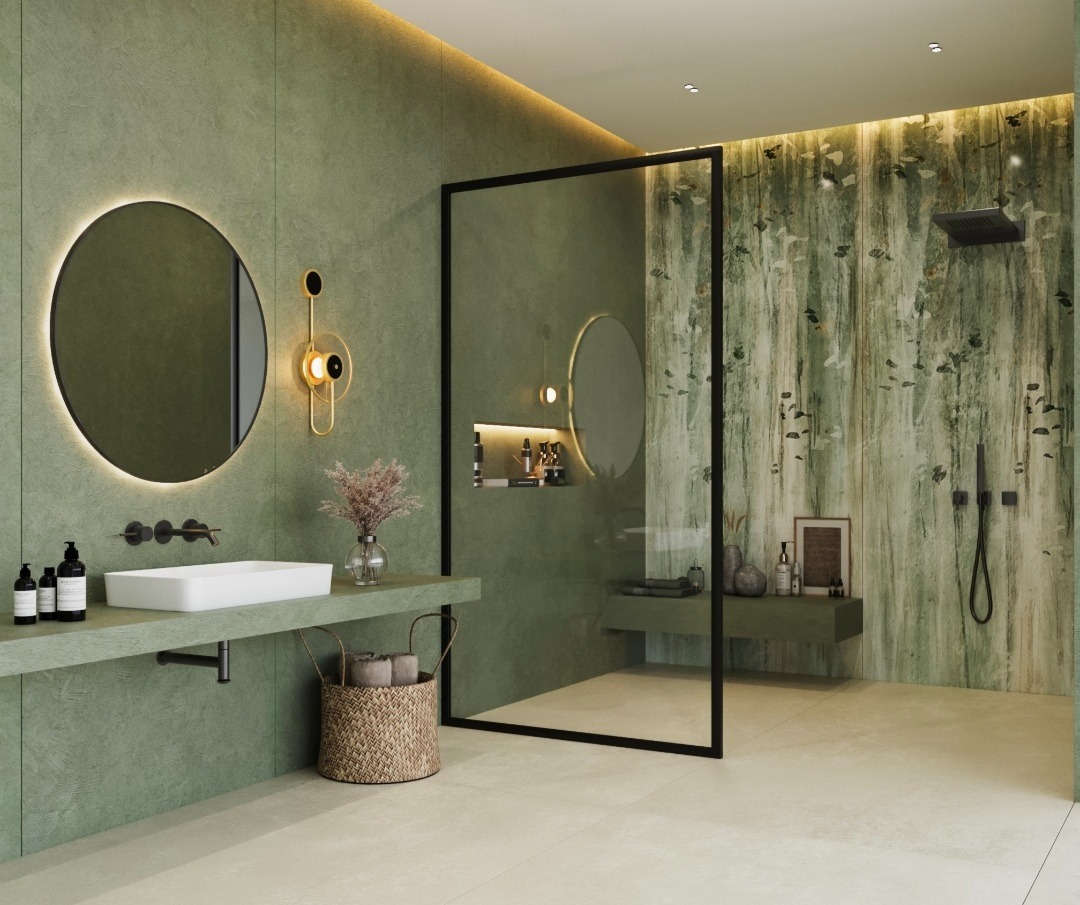
Porcelain Slabs for Bathroom Feature Walls
Bathrooms are another area where large slabs can make a significant difference.
Using the same slab across a feature wall and selected surrounding surfaces can create a cohesive appearance.
Popular applications include:
Shower walls: Large slabs can reduce the number of grout joints in wet areas.
Vanity walls: A dramatic stone-effect slab can create an elegant backdrop behind a basin and mirror.
Full-height walls: Extending a slab vertically can make the bathroom feel taller and more spacious.
For bathroom floors, however, the surface’s slip resistance and suitability for wet environments should always be considered separately from its wall application.
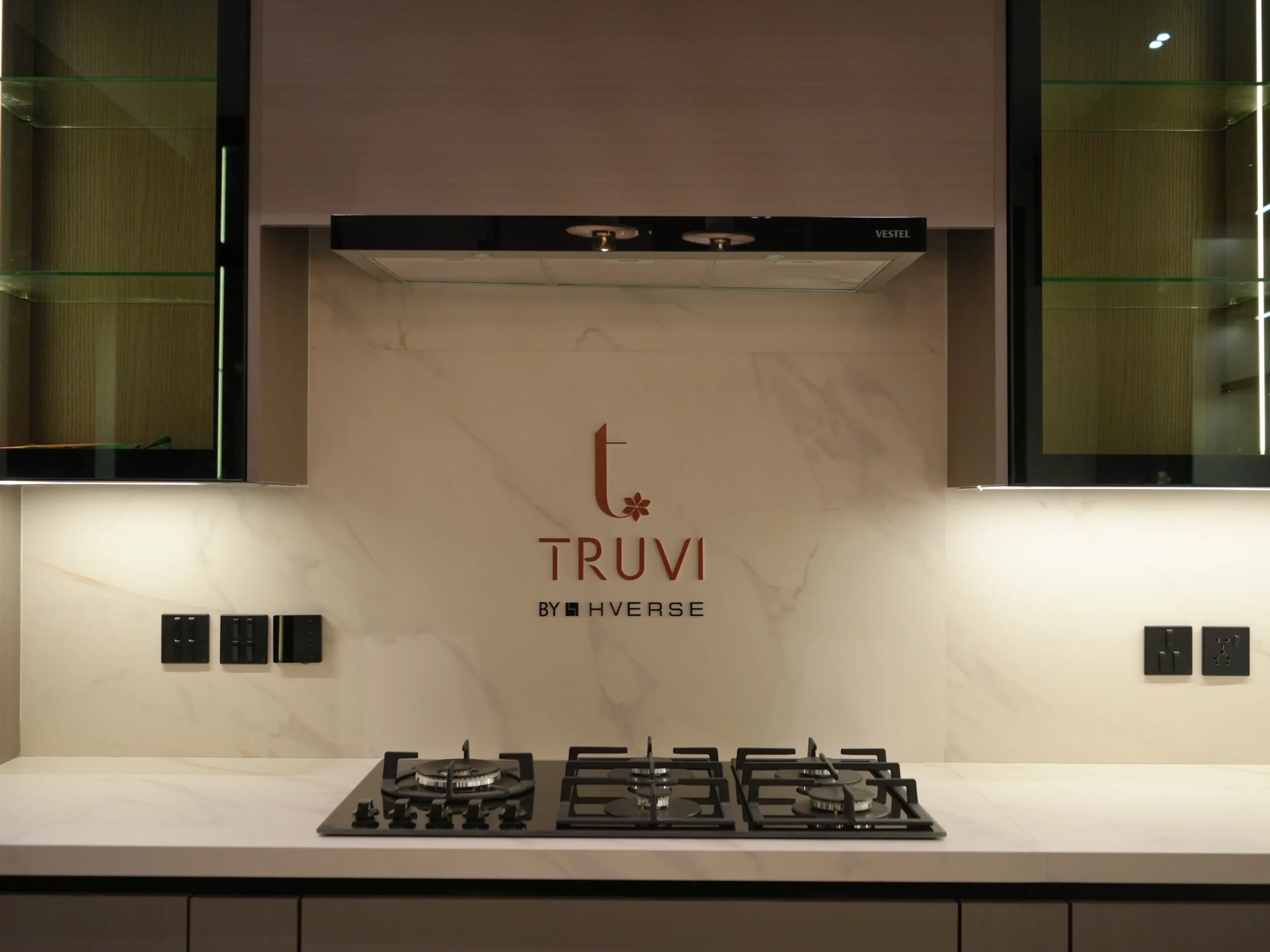
Porcelain Slabs for Kitchen Feature Walls
Kitchen walls can benefit from both aesthetics and practicality.
A porcelain slab can be used as:
- A backsplash
- A full-height feature wall
- A wall behind the cooking area
- A visual extension of the countertop
For contemporary kitchens, matching or coordinating the slab with the countertop can create a unified design.
For example, a marble-effect slab used across the backsplash and countertop can visually connect the two surfaces.
Are Porcelain Slabs More Durable Than Wall Tiles?
Porcelain is known for its durability and low water absorption compared with many conventional ceramic products. However, durability depends on the specific product, installation, and application.
For wall applications, the most important considerations include:
- Product specifications
- Thickness
- Weight
- Wall condition
- Adhesive compatibility
- Professional installation
Therefore, don’t choose a slab based solely on its appearance. Always check the manufacturer’s technical specifications and ensure the product is suitable for the intended wall application.
What About Installation?
This is where porcelain slabs differ considerably from conventional tiles.
Because slabs are large and can be heavy, installation requires proper planning and experienced professionals.
Before installation, consider:
Wall Preparation
The wall must be sufficiently flat, stable, and suitable for the slab system being used.
Transportation
Large slabs require careful handling from the showroom to the project site.
Cutting
Openings for electrical sockets, plumbing fixtures, niches, and other elements should be accurately planned before cutting.
Professional Installation
Large slabs should ideally be installed by experienced professionals familiar with large-format porcelain.
A premium slab can look exceptional when installed correctly, but poor installation can compromise the final result.
When Are Traditional Feature Wall Tiles Better?
Porcelain slabs are not automatically the best choice for every project.
Traditional feature wall tiles may be better when you want:
- Intricate patterns
- Smaller decorative elements
- Mosaic designs
- Geometric layouts
- Lower material and installation complexity
- More flexibility in creating detailed patterns
For example, a bathroom with a geometric feature wall may benefit more from smaller tiles than one large slab.
The right choice ultimately depends on the design concept.
How to Choose the Right Slab Design
When selecting a slab for your feature wall, consider the overall interior.
For Minimalist Interiors
Choose subtle stone textures, warm neutrals, soft beige, grey, or understated marble patterns.
For Luxury Interiors
Consider dramatic marble veining, onyx-inspired designs, or sophisticated natural-stone effects.
For Modern Interiors
Concrete-inspired surfaces and clean architectural textures can complement contemporary furniture.
For Warm Interiors
Travertine-inspired and earthy stone designs work particularly well with wood, brass, and warm lighting.
Your slab should complement the room rather than compete with every other design element.
Porcelain Slabs or Tiles: Which Should You Choose?
There is no universal winner.
Choose porcelain slabs if you want:
- A high-end architectural appearance
- Minimal grout lines
- Large continuous surfaces
- Strong visual impact
- A premium feature wall
Choose traditional tiles if you want:
- Detailed patterns
- More layout flexibility
- Mosaic or geometric designs
- Smaller decorative elements
- Easier handling during installation
For large statement walls, porcelain slabs for walls are often the more visually impactful option. For decorative and highly patterned walls, conventional tiles can provide greater creative flexibility.
Why Choose HVERSE for Large-Format Surfaces?
Choosing the right surface is only one part of creating a successful feature wall. You also need access to suitable designs, formats, finishes, and professional guidance.
HVERSE brings together premium interior surface solutions for homeowners, architects, and designers looking to create sophisticated residential and commercial spaces.
From large-format porcelain surfaces to feature wall solutions, the right material can help turn an ordinary wall into a defining element of an interior.
Before making a purchase, consider the wall dimensions, lighting, furniture, installation requirements, and overall design language of your space.
The best feature wall is not simply the biggest one — it is the one that makes the entire room work together.
Frequently Asked Questions
1. Are porcelain slabs better than tiles for feature walls?
Porcelain slabs can be better for feature walls when you want fewer grout lines, a continuous visual effect, and a premium architectural appearance. Traditional tiles can be better for detailed patterns and decorative designs.
2. Can porcelain slabs be used on bathroom walls?
Yes, suitable porcelain slabs can be used on bathroom walls when the product and installation system are appropriate for the application. Professional installation and proper wall preparation are important.
3. Do porcelain slabs have fewer grout lines than tiles?
Yes. Because porcelain slabs are much larger than conventional tiles, they can cover larger areas with significantly fewer joints.
4. Are porcelain slabs difficult to install?
Large slabs require more careful handling, transportation, cutting, and installation than standard tiles. Experienced installers are recommended.
5. Are porcelain slabs suitable for luxury interiors?
Yes. Large-format porcelain slabs are widely suited to luxury interiors because they can provide continuous stone-inspired designs, dramatic veining, and a clean architectural appearance.